
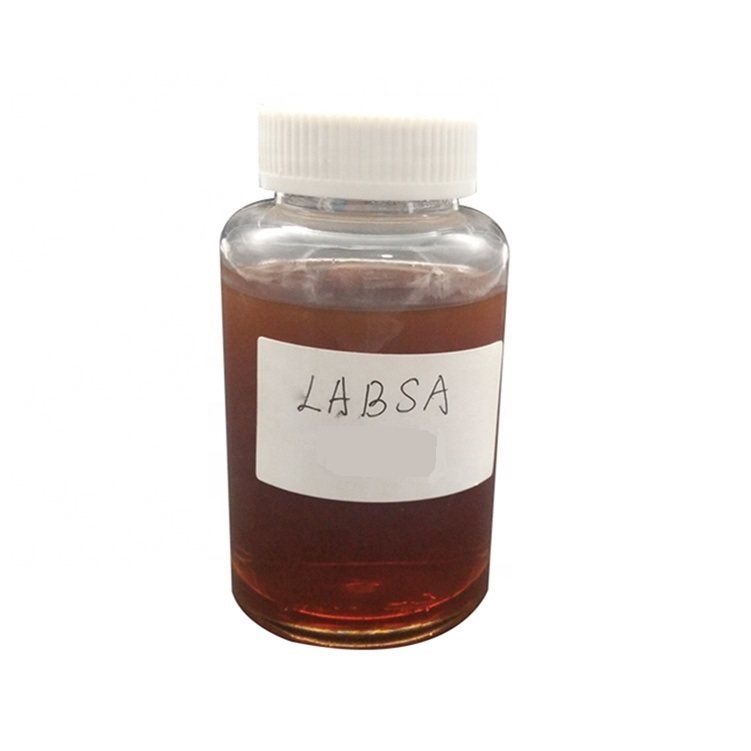
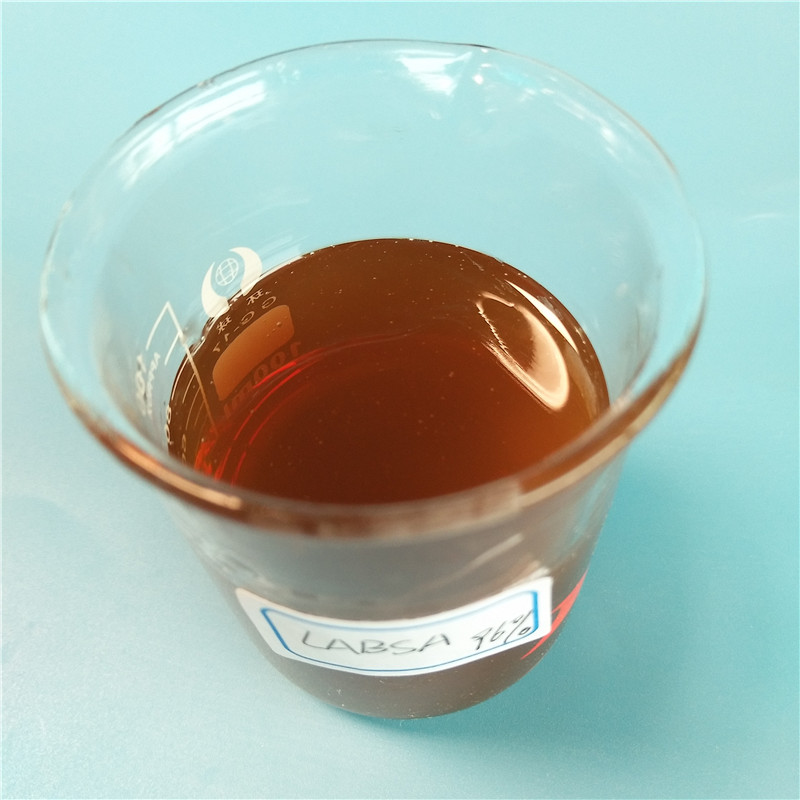
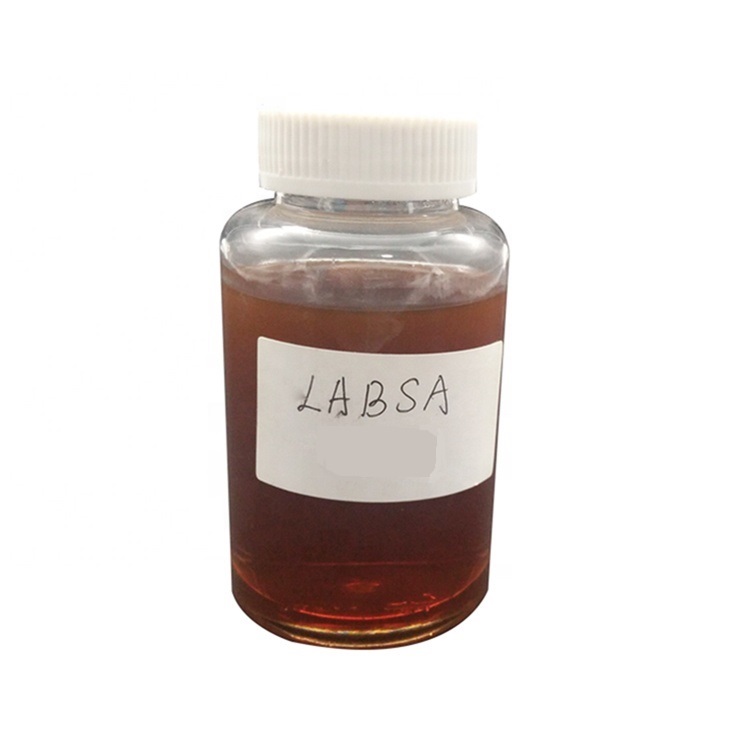
Sulphonic Acid 96% (Labsa 96%) Chemical appearance:
Sulphonic Acid 96% (Labsa 96%) is a sticky, highly viscous brown liquid. This highly dense liquid does not have a pungent smell. In temperatures lower than 10 degree Celsius, the chemical solidifies.
Chemical application and strengths:
-
- LABSA (Linear Alkylbenzene Sulphonic Acid) is an anionic surfactant. Its molecules contain both hydrophobic and hydrophilic groups, which allow it to interact with oils, water, and other substances. Manufacturers produce LABSA through a sulfonation process using agents such as chlorosulfonic acid, sulfuric acid, diluted sulfur trioxide, or sulfamic acid. Its long alkyl chain allows manufacturers to create different formulations by combining LABSA with other salts and ingredients.
Manufacturers use Sulphonic Acid 96% as a cost-effective synthetic surfactant in various household and industrial applications. They use it to produce emulsifiers and detergents for household cleaning and dishwashing. The textile industry also uses LABSA in mercerizing and cleaning agents.
LABSA can increase the surface area of distempers, which helps improve its performance as a wetting and emulsifying agent. Manufacturers can also combine LABSA with other surfactants to enhance foaming in toilet soaps and other products that require high foaming performance.
LABSA 96% contains a high level of active matter while maintaining low water and salt content. These properties allow manufacturers to use it as a polymerization agent in emulsion formulations and in the production of coupling agents and agricultural herbicides.
LABSA ranks among the commonly used anionic surfactants. However, prolonged or direct exposure can cause skin irritation or damage because the surfactant can disrupt the skin’s lipid barrier. Proper handling and protective measures can help reduce these risks. LABSA also readily biodegrades, which makes it suitable for applications where biodegradability matters.
Manufacturers use LABSA in specialized applications, including certain processes in the metal electroplating industry where it can help prevent rust.
- LABSA (Linear Alkylbenzene Sulphonic Acid) is an anionic surfactant. Its molecules contain both hydrophobic and hydrophilic groups, which allow it to interact with oils, water, and other substances. Manufacturers produce LABSA through a sulfonation process using agents such as chlorosulfonic acid, sulfuric acid, diluted sulfur trioxide, or sulfamic acid. Its long alkyl chain allows manufacturers to create different formulations by combining LABSA with other salts and ingredients.
Frequently Asked Questions
1. What is (LABSA 96%)?
2. What does LABSA stand for?
3. What is Linear Alkylbenzene Sulphonic Acid?
4. What is the chemical composition of LABSA 96%?
5. What is the CAS number of LABSA?
6. What are the synonyms and alternative names for LABSA 96%?
7. Is Sulphonic Acid 96% the same as LABSA 96%?
8. What does 96% active matter mean in LABSA?
9. What are the main uses of LABSA 96%?
10. Which industries commonly use Linear Alkylbenzene Sulphonic Acid?
11. Is LABSA 96% used in detergent manufacturing?
12. How is LABSA used in laundry detergent formulations?
13. Is LABSA used in liquid detergent manufacturing?
14. Is LABSA used in detergent powder production?


Reviews
There are no reviews yet.