
Hydroxamic Acid
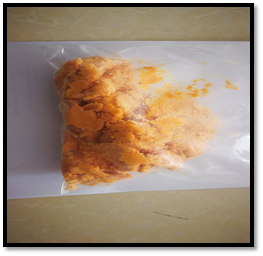
Hydroxamic acids are a class of organic compounds. Functional group RC(O)N(OH)R’ where R and R’ are organic residues and CO is the carbonyl group. They are amides. Used extensively for the flotation of rare earth minerals during concentration and extraction of ores. Octyl Hydroxamic Acid is a very useful chemical compound which is made by the reaction of esters or acid chlorides with hydroxylamine salts. Its chemical formula is C9H19NO2.
Chemical Applications and Strengths
Octyl Hydroxamic Acid or N-Hydroxynonanamide is an extremely useful chemical compound and therefore, has many industrial applications. Its main applications and strengths are:
- Octyl Hydroxamic Acid is widely used in the mining industry as a collector and flotation reagent, particularly for oxidized sulfide minerals and various metal oxides. It can also collect minerals that conventional flotation collectors may struggle to recover.
Key Mining Applications and Properties
- Mineral-processing operations use Octyl Hydroxamic Acid as a strong collector for minerals such as wolframite, copper oxide ores, ilmenite, hematite, niobium-bearing ores, and other oxidized minerals.
- It can effectively collect a wide range of non-ferrous metal minerals.
- In fine pyrochlore flotation, Octyl Hydroxamic Acid can outperform sodium oleate because hydroxamate groups exhibit strong chemisorption affinity toward pyrochlore surfaces.
- It can act as an effective metal-chelating agent by forming complexes with certain metal ions.
- Researchers have investigated hydroxamic-acid compounds for applications involving the reprocessing of irradiated nuclear fuel.
- Under alkaline conditions, Octyl Hydroxamic Acid can effectively collect certain cobalt- and copper-bearing minerals.
- Hydroxamic acids also have applications in pharmaceutical and agricultural research, including investigations involving anticancer, antimicrobial, antifungal, insecticidal, antimalarial, and other biological activities.
Flotation and Handling
The alkyl-chain length of a hydroxamic acid can influence its hydrophobicity and flotation performance. Longer chains can broaden flotation capability for certain mineral systems, although the optimum collector depends on the ore and operating conditions.
Operators commonly prepare Octyl Hydroxamic Acid as an aqueous solution for flotation applications. The optimum pH depends on the mineral and process conditions; alkaline conditions can provide strong collection performance for some flotation systems.
Storage
Store Octyl Hydroxamic Acid in a dry, well-ventilated environment away from water, excessive heat, open flames, and direct sunlight. Low temperatures can cause the product to solidify or crystallize. Allow the material to return to an appropriate temperature before use and follow the supplier’s storage and handling recommendations.
Frequently Asked Questions
- What Is Hydroxamic Acid?
- What Are Hydroxamic Acids?
- What Applications Use Hydroxamic Acid?
- What General Chemical Structure Does Hydroxamic Acid Have?
- Does “Oxide Ore Collector” Refer to a Single Chemical or a Family of Compounds?
- Which Types of Hydroxamic Acid Do Mining Operations Commonly Use?
- Do Mineral-Processing Operations Use Oxide Ore Collectors as Flotation Collectors?
- How Do Hydroxamate Collectors Work in Mineral Flotation?
- Do Mineral-Processing Operations Use Oxide Ore Collectors for Oxide-Mineral Flotation?
- Which Minerals Can Hydroxamate Collectors Float?
- Do Mineral-Processing Operations Use Oxide Ore Collectors for Copper-Oxide Flotation?
- Do Mineral-Processing Operations Use Oxide Ore Collectors for Rare-Earth Mineral Flotation?
- Do Mineral-Processing Operations Use Oxide Ore Collectors for Rare-Earth Element Beneficiation?
- Do Mineral-Processing Operations Use Oxide Ore Collectors for Iron-Oxide Mineral Flotation?
- Do Mineral-Processing Operations Use Oxide Ore Collectors for Titanium-Mineral Flotation?
- Do Mineral-Processing Operations Use Oxide Ore Collectors for Tungsten-Mineral Flotation?

Reviews
There are no reviews yet.